

|
Index
•
|
|
Welcome
•
|
|
|
The International Writers Magazine: Comment
IS ETA'S PEACE FOR REAL?
• James Skinner
On the 11th of March, 2003 several carriages of four commuter trains coming into Madrid were blown to bits. It was early in the morning of a normal working day hence the trains were packed. No fewer than 200 people were killed and another 2000 were injured. The Spanish government, led by the conservative People’s Party erroneously placed the blame on ETA, the Basque separatist movement.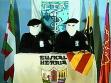
The methods were certainly similar to those perpetrated in the past by the so called freedom fighters, although never on a scale of such human carnage. Not only was the government mistaken (the horrific massacre was due to yet another Al Qaeda attack) that in the Spanish General elections that followed almost immediately, they were toppled by the opposing Socialist party. Trouble is that Spain, for the first time in 8 years, was left with a governing minority and the new president, Jose María Rodriguez Zapatero had no choice but to enter into negotiations with the left-wing Nationalist parties to form a government.
One of the political parties was the ERC, the Catalonian Marxist republicans who have always clamoured for independence from Spain. However, because of these new partnerships, the door was opened to study and redefine regional autonomy as laid out by the Spanish Constitution of not only Catalonia but other nationalist regions including Galicia and the Basque country. For the first time since the transition period from the Franco dictatorship to democracy in 1978, the Spanish voters have inadvertently allowed for a redefinition of their Constitution that could eventually revert to more political freedom for these regions. Many interpret these new negotiations as eventual independence from Spain, including the Basque country.
But what about ETA?
The Madrid massacre had sent shock waves throughout the whole country. Every Spaniard from North to South and East to West condemned the atrocity out right. Back in the HQ of Batasuna, the illegally declared political wing of ETA was rethinking its strategy. It is obvious that the magnitude of such a criminal act had put a damper on any intention of continued violence that could include loss of life. However, the extortions, street violence and vandalism continued. The scale of bombings had been tapered to a few squids placed around the country just to remind the public that ETA was alive and well. Then, out of the blue, a press report shocked the nation. The ERC had been secretly negotiating with ETA for a ceasefire. Where? Not for the whole of Spain but for Catalonia! ‘If you don’t come to Barcelona to blow up supermarkets, we’ll support your freedom fighting,’ was the kind of message that came across to the rest of Spain. To add fuel to the fire, the socialist government in cahoots with the ERC was in the midst of negotiating Catalonia’s new rules on autonomy.
Naturally, the People’s Party, now in the opposition hit the roof; so much so that their continuous acid rhetoric has dubbed them Spain’s ‘moans and groans’ party.
But Zapatero, up until now has not being doing too badly. We all know that he pulled the Spanish troops out of Iraq, much to the dismay of George Bush but the result has been nothing but positive. Iraq turned into a mess. To add insult to injury, Zapatero then kicked off the so called ‘Alliance of Civilisations’, a sort of worldwide ‘think-tank’, in an effort to quell the world turmoil of Islam versus the rest. Even Condoleezza Rice conceded that there might be something in this type of reconciliation to stop the rot. His next move was to snub the UK in exchange for a ‘new’ relationship with the pillars of Europe; France and Germany. ‘We are the real Europe’, he said in a press statement. On the domestic front he has also been gaining Brownie points. He has introduced woman’s equal rights (half his cabinet is female as well as top level jobs in the Civil Service), legalised homosexual marriages, abolished religious education, brought a clamp down on domestic violence and passed a law to ban smoking in most public places. All good stuff! Above all, he continues to lambaste the USA over most of its foreign policies and this anti-Americanism in itself has improved his ratings in the opinion polls.
But the sweetness within the honeymoon is beginning to sour. He’s beginning to upset the status quo that took Spain so long to achieve since the end of the Franco era.
Several recent moves have not only split Spain down the middle but have opened the old wounds of the Spanish Civil war. The mere fact of opening up a dialogue with the Catalans for more autonomy has caused them to ask for ‘Nation’ status. This includes the Catalan as the main language, the removal of all symbols that remained from the Franco era and above all, the return of the national archives pertaining to Catalonia and stored in Salamanca, to be returned to the Catalans. All these demands have triggered off similar ones in the Basque region, Valencia, Galicia and even Andalusia. They all wish to be different. The bottom line is always the economic issue. That is, who pays what to whom from the central coffers!
Turning back to Europe, Zapatero had another setback when his old friend Schroeder was replaced by Angela Merkel, the new German Chancellor. Ms. Merkel, in true Thatcherism fashion has informed Europe on no uncertain terms that Germany comes first, Europe second and Spain, ‘well, I’ll think about it!’ As for France, the Prime Minister Villapen is too busy fighting the youngsters and the trade unions on France’s labour laws to worry about Spain. And the seat of power in Brussels? Well, apart from a cutback on certain European funds and a few slaps across the wrists for not complying with many European rules the Spanish government is now in hot water, for literally causing a ‘power struggle’ thanks to protectionism in the energy sector. A possible takeover by a German power company E’ON of Endesa, Spain’s power conglomerate has been squashed by the Spanish Energy Commission. Ms. Merkel blew a fuse whilst the EU, once again is studying the options of applying fines on the Spanish government.
In the middle of all this kafuffle, about two weeks ago, ETA comes along and declares an indefinite ceasefire. Suddenly, the tables are turned around. All eyes are once again on Zapatero who proudly announces that the end to 40 years of violence and murder is as near as it has ever been. He is forgiven his woes in Brussels and hailed by the 25 European members plus a few odd ones like Koffi Annan from the United Nations as the new anti-terrorist hero. France is tickled pink as it could be a load off their own backs if ETA stopped pestering the Southern borders. Back home, the People’s Party, who had been ranting and raving on how badly Zapatero had handled everything he laid his hands on, now have to simmer down and for once co-operate with the government to pull off the end of the strife. Even the Association of Terrorist Victims so badly hit by ETA’s murderous campaign, has mildly applauded the move as a ‘light at the end of the tunnel.’
The question remains: why has ETA suddenly decided to pull out after so many years of hammering every Spanish government with their criminal acts all in the name of Basque independence? Are they tired of fighting a continuing losing battle or have other factors now entered the equation? One correspondent in the BBC has commented that the European Union philosophy of a united Europe is in direct contrast to state fragmentation or Balkanisation which is what ETA always stood for. That is why they consider their struggle would lead nowhere in the present European climate. But then how about all these moves in Spain to change the constitution to allow for more autonomy that is in effect the first step towards independence? If Catalonia, the Basque country and Galicia were to be given independence they would automatically lose all European status and would have to join the queue of other countries waiting to join the EU. Once again, Zapatero is clever. ‘We’ll cross that bridge when we come to it,’ is in the back of his mind. ‘Getting ETA to lay down their arms and pacifying the autonomous regions with a simmered down version of independence without breaking away all together will move me closer to win the next elections.’
The icing on the cake would be that, if this new political approach allows Batasuna to revert to a legal status, similar to the Sinn Fein in Northern Ireland, who knows, ETA could have the last laugh after all.’
© James Skinner. April 4th 2006.
jamesskinner@cemiga.es
Rebel Youth in Mass Protests
James Skinner
Home© Hackwriters 1999-2006
all rights reserved - all comments are the writers' own responsibiltiy - no liability accepted by hackwriters.com or affiliates.
