
Welcome • |
About
Us • |
IS THERE A FUTURE FOR THE CAR?
• Sam North Archives - 2013In 2002 I contemplated the future of the car and it is interesting to go back and rethink an article. So much has changed in 13 years. China has become car obsessed and fortunes have been made in supplying to that market. America still consumes more oil than the rest of the whole world put together with crazy overpowered vehicles - all this despite the fact that they have to import most of their oil from the middle-east. A region they have monumentally destabilised since the Iraq war.
Green politics are big right now and politicians are scrambling to climb aboard and frighten us all with legislation against the car. Cities are squeezing the car out, punishing drivers for owning one, parking one, or using bus lanes, even in the middle of the night. Speed cops are the worlds largest growth industry to create revenue for local politicians and in the West, at least, motorists are being criminalised by the thousands daily. In the UK there are now 7500 fixed speed cameras and 5000 hand held. The state has declared war on drivers. . What will be the breaking point?
So thinking about the future of the car is still very relevant
The key to public transport in cities is reliabity, price, accessibity and safety. A city that does not reinvest in a constant cycle in people-moving will die.
Is there a sustainable future for the car?
The future of the environment is so closely allied to transportation issues, and in particular the motor vehicle, one cannot be considered without the other.
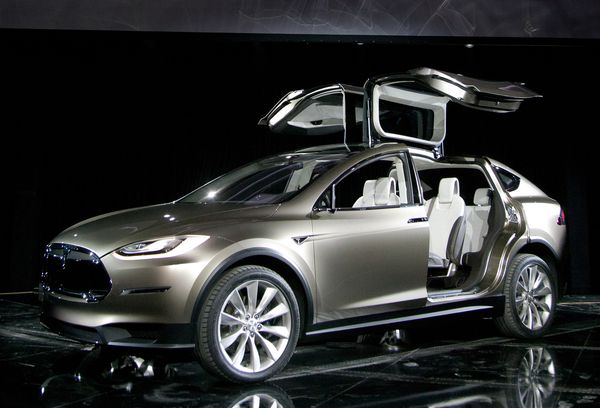
Image: Tesla X
The truth is, however, that the car has come to define our environment, what is and what isn’t accessible, what can be dug and removed to make way for the car and what parts of our cities and towns can be set aside for parking of cars
Nevertheless, the car stands for personal freedom. The rich value it because it is their privacy they prize. The very poor simply aspire to own cars because it is a symbol of success. This is a dream shared by billions all across the planet. For many, the car is a necessity. Rural areas in the West as much as other more remote communities in places such as Northern Scandinavia or South-West Africa cannot depend upon public transport. It is unreliable, inefficient, not really tailored to their lives or scattered populations. Australia, South Africa, the Southern United States and huge areas of the globe where many people inhabit, people live there because the car makes it possible to do so. To demand that people should leave these places and gather in suburban or urban concentrations to make it ‘more convenient’ to serve them with public transportation, foolishness. I am not sure is actually a 'green' solution to build massive vertical cities.
The bus and train is a perfect city solution. Certainly it can bring and take people to suburban concentrations with ease and economic scale that the car cannot possibly reach. But it can’t deliver masses to their doors unless they live on top of it. The London Underground or New York Subway is a good illustration. Convenient, traffic free (but not congestion free).
Street Cars making a comeback?City planners have targeted the car as public enemy number one in cities, with some justification. Overcrowding, the polluted air, the degraded people spaces, parking issues, noise and safety. They have done little in the way of providing safe and protected parking outside the cities however and this is one of the great failures of the last century. Park and Ride had a future, but now it is an expensive option. Land is scarce and safety costs money. London by charging £24 pounds to enter it (unless you own an EV) in hopes to keep the car out. It has reduced car traffic but now London is choked with buses and air quality is in fact worse. Has it kept shoppers away from Knightsbridge, Oxford and Bond Street? A small percentage yes, but not really significant. And there is the rub. If you do not live in London, you will either chose to pay this ‘fine’ or use public transport. Right now, public transport in London is hazardous, slow, prone to failure, strikes, terrorist attack and is sometimes dangerous and often cancelled. No matter what they promise to invest in London, it may never actually be as good as it was twenty years ago. Meanwhile your car is yours to command. It might well be a price worth paying. (if you can afford £12 an hour for parking)
Is the car sustainable in our future?
The question should be which future, which car?
In the city, electric short journey vehicles (SJVs) must come to the fore to supplement bus and train journeys. The future of cars depend upon the choice of engines as we become much more aware the damage they have done and are doing to our health and our cities. These cars could be hybrid vehicles such as those developed by Toyota. The Prius has already sold more than 1.5 million units worldwide (2012 ) and the hybrid Camry already outsells the Prius in Canada. The Nissan all electric Leaf does not seem to have caught on however, given that it has a range of less than 170 miles. It is also very expensive.In fact electric cars with their range anxiety are the disappointments of this revolution in transportation. Tesla offers a deal where if you can't recharge in California there's a rental car waiting nearby. Range is improving fast but so are the prices of going full EV. Hybrids are a bit of a cheaper option but they usually only deliver 40 miles of electric driving. Tesla made their first profit in 2013 but the discussion about displacement of pollution needs to be had. Clean electic cars are powered by either coal or oil or nuclear power stations. You'd like to think solar or wind, but the truth is there is not the critical mass for those souces of energy to power all our cars if we went electric. *That said 53% of electricity in the UK comes from renewables now
What are hybrids?
Duel fuel cars - part electric, part petrol or hydrogen or liquid gas. These do have higher production costs, but environmentally and with the support of legislation and tax breaks, it may make sense to sell and for people to buy these cars. Quiet clean electric in town, carbon fuel intensive for long journeys between cities at high speeds. (In the countryside such vehicles may be seen as unnecessarily exotic and expensive.) Prius sales have been impressive it is in fact the third highest seller in the world. (There are hidden scrapping costs though and as of 2023 Prius is no longer on sale in the UK) .
Proton exchange membrane engines using chemically active platinum catalysts are proposed by companies such as International Fuel Cells and Vancouver based Ballard Power Systems. So far the problem has been storing highly combustible elements. But since one of the proposed fuels is hydrogen, the emissions will be water vapour, it has to be one of the possible front runners. In Ford’s own company literature of 2007 ‘I believe fuel cells will finally end the 100 year reign of the internal combustion engine’. I have to say, despite Ford offering hybrids now and at least one electric vehicle - the combustion engine is fighting back with fuel efficiency. They have decided to go all in on EVs from 2023 however starting with the Mustang EV which offers a range of 300 miles depending on how it is driven.
There is talk that hybrid cars will generate surplus power for sale back to the local grids or local buildings. ‘95% of power capacity in the USA resides in automobiles with only 2% in electric power plants’ according to Electric Power Research Institute’s Brent Barker. There is a danger that the hybrid engine concept will be oversold similarly to nuclear electric power in the 1950s that would be ‘too cheap to meter’.
The car as a means of civilised transportation and self-esteem will continue to dominate and there will be continued demand for petrol or diesel to feed it. In places like China or India however the car is an overwhelming aspirational item for millions of people and there is a huge unsatisfied demand. There is an extensive bus and train infrastructure for all, but just as rising living standards in the West changed people perceptions of what constitutes ‘success’, public transportation is associated with poverty. Before 2001 there were no private car sales in China. In 2006 3.8 million units were sold alone, including trucks, it is now 120 million. Road building continues apace and with the concept of private property now enshined in law in China, the country is been transformed literally before our eyes and with it comes all the problems that Europe and America have had for nearly a century. Death on the roads are soaring, pollution, traffic choked cities and health related problems. And it is just starting. The car might eat China. We shall see. Meanwhile we have profited by selling cars to them from the West. How keen will we be when Chinese designed and made cars start selling here under cutting our own I wonder? (MG SUV Evs already undercut Telsa by 30 percent). This is just beginning. Meanwhile in those years since I first wrote this Hyundai & KIA from South Korea has risen to the number three spot in the world car manufacture and they have crossed the barrier for reliability and developed that thing that VW cherished - customer loyalty.
A train journey in India covering many miles between cities might cost only a few dollars, but it will be full to the brim and rarely maintained to a western standard. The car then, with privacy, faster journey times and able to go exactly where you want to go is clearly going to be seen as a necessity and be a catalyst for personal ambition for millions of Asians for years to come. As standards rise, people want freedom from overcrowded buses and trains, they want their own ‘space’. The car is not just means of transport; it is a symbol of prosperity and ambition. The evidence of such a shift is happening at a terrifying speed in Shanghai. In the last ten years, they have essentially built a new city that would normally take fifty years elsewhere. Now everyone wants a car and associates the lack of one with ‘backwardness’. They also want EV's as they grow more concious of air pollution.
In more mature economies the car is seen to be a ‘problem’ and investment in rail intercity connections is made. To France’s credit they have invested in their fast TGV trains. But it has been at a huge cost in terms of capital, time and taxation. Simultaneously, in British Columbia, Canada, with huge distances to cover they have allowed the passengers trains to wither on the vine and in October 2002 virtually discontinued local passenger trains altogther, leaving the car and SUVs king. (However they are expanding the Skytrain commuter system which now connects to the airport in Vancouver).
Obviously - in the West, we have lived with the consequences of mass car ownership since the end of WW2. It would be extremely difficult, if not impossible, to wean people off their cars. Most would not quibble that a fossil fuel economy cannot go on forever. But it remains a fact that there is as much oil in the ground as was ever consumed. In theory, the car and petrol can go on - regulations aside. However, as China takes up car ownership on the level of the West, the global demand for oil has risen extremely sharply, as has the price and competition to secure supplies. The country with duel fuel cars will have an advantage. Equally, other car-choked countries like Thailand already have huge smog problems, which clearly cannot continue without health consequences. Then there is the fact that China has been buying up all the rights to extract lithium around the world. That chicken will come home to roost around 2024.
Fossil fuels do have a negative side. Accidents (though our car accident rate in the UKis falling due to better cars and brakes or public awareness, in China is it soaring and getting worse). The UK is utterly dominated by roads and highways. The air quality in cities has deteriorated (though none are as lethal as when every home burned a coal fire). The car emits carbon gasses that lay trapped in our upper atmosphere. There are studies that show that the carbon levels now are as high as 55 million years ago (from ice core samples taken from Russia and Siberia). The consequences of this could be a rising of world temperatures and the drying and burning of the world’s forests, as well as rising sea levels. This was what the ‘Kyoto Agreement’ was all about. The Inconvenient Truth as Al Gore remarked and is now effectively dead. Climate Change is still disputed by right wing politicians despite melting glaciers, incredible summer heatwaves and crazy cold wet winters in California of all places.
To blithely argue that the car is wrong, that it will in effect seal our fate and destroy the planet is to be defeatist. The car will not go away. There is no model that shows that people will forsake them for buses or trains. There is probably no economic model that could provide efficient solutions for the countryside.
The car is sustainable as a concept, a desire, a necessity. The debate is only about the fuel needed to move them. That might be hydrogen, it might be duel fuel engines, it will probably be electric. At the end of the day, someone will have had to develop that fuel and deliver it to the point of sale. We will have to pay for that fuel. I am not sure there is a model for what exact price it will be that we will not pay to surrender our freedom, but I suspect it is a very high price indeed.
For the car to survive, it is simply necessary to prove that a new generation of fuel is clean, the engines reliable, that refuelling is simple and safe and available wherever we want those recharging points. This will be our future.
© Sam North 2002/2007/2013/2023
Oil stands at $85 a barrel 1.10.23
Sam North is the editor of Hackwriters.com
Want to buy an electric car?
• Sam Hawksmoor
The electric car was the go to purchase back in 1912. What happened? Will the EV stick this time around?
More Futures
The new edition of 'ANOTHER PLACE TO DIE: ENDTIME CHRONICLES
By Sam Hawksmoor & Sam North
There's no safe place to hide from a lethal pandemic
Print & Kindle - Q&A interview with the authors here
A city gripped by fear. People are petrified of being thrown into quarantine. Best friends Kira and Liz once parted are scared they will never see each other again. Teen lovers, Chris and Rachel, prepare to escape to the islands.
a taster here The Last FerryReview from the First Edition:
'Beautiful, plausible, and sickeningly addictive, Another Place to Die: Endtime will terrify you, thrill you, and make you petrified of anyone who comes near you...'
Roxy West - Amazon.co.uk