

|
Index
•
|
|
Welcome
•
|
|
|
The International Writers Magazine: Film and Japan
What has happen to the Japanese family?
• Victoria Groom
From the outside, the importance of family within Japanese culture seems paramount, why then, do many Japanese films tell a different story?
Japanese society portrays a picture of immense pride for their culture and country, at the centre of this culture has been the archetypal family unit, which from a western perspective appears to be based on respect for ones elders. It is this respect that creates, what westerners believe to be hierarchy within the home.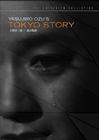
What is somewhat obvious is that the younger generation has little, to no power within the chain of command. This an issue that many Japanese directors have demonstrated within their films, perhaps the most influential example of this, would have to be Ozu’s Tokyo Story (1953), described as "The most Japanese of all directors", surely this will give a true insight into the real Japanese family unit. The film is about a grandmother and grandfather who come from the suburbs, and make the long journey to visit their children in Tokyo. Immediately Ozu shatters any preconceived ideas that the western world might have about the family, as the children appear spoilt and hold much of the power over their parents. What is frustrating to the audience, is, that is a clearly dysfunctional family, but the film offers no answers. The grandchildren can not even be bothered to sit and spend time with their relatives, their grandparents visiting, seems to be a great inconvenience for all. The style in which the film is directed, allows the audience to simply watch the action, in a similar manner to that of a documentary. This film really unearths the generation divide in Japan; the older generation wants to remain in their family unit, as it offers a form of safety and superiority, whereas the younger generations are keen to move away from tradition. It is said that "The clash of modern and traditional is shown through the different generations. In the conflict between a traditional parent and the independent minded modern child.". Ozu’s depiction of the family, suggests that the younger generation is moving away from the group mentality that the Japanese culture normally conforms to.
What is interesting in Tokyo Story (1953) is that is shows an extremely dysfunctional family, but offers no answers or resolutions to the problem, this is mainly due to the fact that it is an on going problem which has no obvious answers. As a western audience we watch the film feel great sympathy towards the older generation, who are treated with little care or respect, but the Japanese received the film in a very different manner, audiences understood and sympathised with the young generation. This is not so surprising though, as a large majority of Japanese film goers fall into the younger age bracket, the problems displayed in film are more than likely problems that they encounter with their own parents. So clearly part of the problem concerning the breakdown of the family, is due to a generation gap, which displays different interests and morals.
Directors such Ozu, illustrated a theme that looks at children vs. the adult, this is mainly because the chain of hierarchy that is displayed in the "Ie" diagram, is bound to cause confrontation at some point in Japanese history. The child vs. adult narrative is most boldly depicted in Battle Royale (2000), this film is set in modern day Japan, and it shows how the conflict of generations might eventually become so out of control that serious action might have to be taken, in order to restore some kind of chain of hierarchy. The family unit does not play a major part within the narrative, this is very deliberate, as it shows what might happen if the family-group culture is lost all together, thus making the moral of the story all the more powerful. The world of Battle Royale, is very much ‘dog eat dog’, only the strong will survive. The children that take part in the games have to mature rapidly, or they will be killed. The action in the film is consumed by endless amounts of blood and gore, almost definitely symbolizing the mess that society may enter into if the traditional cultural attitudes are not up held. With the demise of the family and respect for the older generation lost, Japan appears to be an extremely lonely place, where happiness is a rarity.
Western society is often shocked at the dramatic differences between, the quintessential ideas of Japanese society and the reality. It is said the Japanese people have a "separation of real feelings from one’s ‘face to the world’", meaning that the reality that you think you see, is perhaps not so. Film has therefore has been the medium to scratch beneath the surface, and uncover the truth. Before film, writers used a naturalistic style, to portray the reality within their novels, but this style proved not very popular, surely because Japan was not ready for the truth!
During the World War 2, group dynamics changed in Japanese society, or perhaps the reality was revealed? Grave of the Fireflies (1988), directed by Isao Takahata demonstrates how families were torn apart during and after the war, leaving many children to bring themselves up, this exactly what happens to the protagonists in Grave of the Fireflies, after their mother is killed in air raid. The effect of continuous fire-bombing, meant that the chain of hierarchy in the family, was no more. The group dynamics that had held the society together for hundreds of years was falling apart. The film conveys the harsh realism of war, the most important thing to each individual was make sure they had access to food, as the rations were poor, and left many malnourished. The children within the film travel to a distant aunt, hoping that due to the family connection she would take them in and look after them; this however is not the case. She is very cruel and insists that the children sell their mothers clothes in order to buy rice. It harsh acts like this that cause the children to turn against their elders, going against the most sacred of Japanese traditions. Just by questioning their aunt, over her actions, reveals that the respect that is fundamental in the hierarchical chain has been lost. Although this is just simply one interpretation of war time Japan, it perhaps offers some explanation as to why the family structure has broken down. Children lost their parents and had to fight for their lives, therefore this mentality is most definitely about a more independent thinking generation, they were no longer concerned with taking over the family house, as many of the houses were no longer standing.
The Japanese economy changed enormously during the 20th century, this change, has put pressure both upon the young and old. During the beginning of the 1900’s Japan was strong, they won the war against Russia. It was this win brought about a move towards modernity, immense pride was felt throughout the country. Farming was still a major part of the countries economy; this began to change after World War 2, when people began to look at the west for inspiration for economic change. Industry began to grow; this allowed children to move out from the suburbs and into the city, in doing this they have broken away from the family-group dynamics. Another point of interest concerning the Japanese family, is the parents need for their children to succeed, this theme is displayed in Tokyo Story (1953), Ozu portrays this, in an extremely humorous manner, wherein the grandfather meets up with some old friends, and drinks the night away, they eventually start talking about how their children have never lived up to their expectations. This although humorous, does display the amount of pressure the elders place on the younger generation. It is said that within the "Japanese stem-family system the eldest son is selected to replace the father in the local society.". This surely underlines that much of the need for success, is so that the parents feel they will be respected in the village or town in which they come from.
The importance of family within Japanese society still remains, but the tradition values held by the older generation, is simply not being upheld their descendants, as the importance of economic success seems more influential and perhaps more exciting than the strict and predictable structure of ‘The Ie’. Therefore the fear of the family breaking down completely seems somewhat extreme, but perhaps in a generation or two, the structure of the family will take influence from the west. The clear divide between old and young that is so often depicted in Japanese film, may become a distant memory, and respect the may be evenly distributed throughout the family. I however believe that Japan will always hold onto their traditions, as there is such immense pride for their heritage, mainly due their resilience during the war and the complex political past, examples of these would be the fight for equality and regaining economic power after their communist years. Unlike the west Japan also has strong beliefs in their religions, which are mainly spilt into Buddhism and Christianity, both of which hold great, the importance of family, therefore this will most definitely help to maintain the family structure throughout the generations.
The narrative structure of Japanese film, can also offer some answer into the state of the family. Unlike the traditional Hollywood narrative that has constant twists and turns, to keep the audience entertained. The Japanese format is simple, it often relates to a specific individual, and their immediate surroundings, this is of course a far more naturalistic style, but it also focuses on the importance of the individual, and their own aspirations and thoughts. With film being a relatively new medium in context to Japanese history, it clearly displays the need for the younger generation to think independently, and therefore play less interest in the group and family dynamics of Japanese culture.
What can be learnt from the above films and most importantly Japanese history, is that Japan is a country that is constantly evolving, economically and as many directors portray, socially, it may not be clear on the surface, but scratch a little deeper and you might find the truth to represent a far more western attitude to their traditional values. So for the time being the Japanese family structure still remains, but the questions is for how much longer?
© Victoria Groom June 2006
Victoria is a recent graduate of the University of PortsmouthBibliography:
Befu, H. (1962). Corporate emphasis and patterns of descent in the Japanese family. In Smith, R., Beardsley, R (Eds.), Japanese Culture: It’s development and characteristics (pp. 34–41). Honolulu: University of Hawaii Press.
Benedict, R. (1967). The Chrysanthemum and the Sword: Patterns of Japanese Culture. London: Routledge.
Bernstein, M., Studlar, G. (1997). Visions of the East: Orientalism in Film. London: I.B. Tauris and Co Ltd.
Hare, J. (2001). The Japanese Family. Retrieved May 13, 2006, from http:// www.sacred-texts.com/shi/jai/jai06.htm.
Handry, J. (1987). Understanding Japanese Society. Kent: Croom Helm Ltd.
Varley, P. (2000). Japanese Culture. Honolulu: University of Hawaii Press.More about Film in Film Space
Home© Hackwriters 1999-2006
all rights reserved - all comments are the writers' own responsibiltiy - no liability accepted by hackwriters.com or affiliates.

