

Welcome • |
About
Us • |

26 Years Online
••• The International Writers Magazine - PROFONDE MUSIQUE
Re-Discovering Boz Scaggs
• James Campion
A Discussion with Jude Warne, Author of the Newly Released 'Lowdown – the Music of Boz Scaggs'
When I set out to pen this column, the goal was to revisit meaningful music, its making, history, and impact, while also introducing new artists and their work to further enhance our appreciation of every genre. Occasionally, like this week, the journey dovetails into artists and music that once had resonance but since have been woefully overlooked or fallen through the chasm of time.
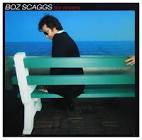
For me, one artist that fits nearly in that category is Boz Scaggs. After climbing to his apex in 1976 with his multi-hit, five-times platinum album, Silk Degrees, driven by three successful singles, most significantly the sultry and funked-out “Lowdown” reaching #3 on the Billboard charts, he faded from a pop music spotlight that never suited him anyway. Scaggs went on to have a solid if not unrecognized career tooling under the radar. Once a blues purist and an original member of the esteemed hit machine, the Steve Miller Band before their meteoric rise, Scaggs remained a respected and prolific singer-songwriter and bandleader. Yet, in many circles, he became stuck in that dreaded “where is he now” box flippantly erected by the rock press and queried from a perpetually distracted audience.
A new book by music journalist and author, Jude Warne, Lowdown – The Music of Boz Scaggs provides an enthusiastically charming overview and detailed breakdown of the musician’s many musical styles and motivations, adorned with commentary from a bevy of his collaborators, many of which would go onto greater fame, like the members of the California “Yacht Rock” sensation, Toto. Jude and I found time to chat about all-things Scaggs, which, along with her highly detailed and readable book, led me to appreciate his music and legacy like never before. Moreover, Warne, who in her youth was a venerated member of the Young People's Chorus of New York, delves deeply into Scaggs’s vocal stylings and as an astute observer of the rock idiom deftly explains why he eschewed chasing hits to find comfort in playing the music he loved, letting his uniquely soulful voice do the talking.
Having written a book by a similarly overlooked artist, Accidentally Like a Martyr – the Tortured Art of Warren Zevon, I found Warne’s motivation to uncover Scaggs’s oeuvre relatable. “Boz is an interesting story because he was around in different decades and went through different phases,” Warne told me when we began our discussion. “After Silk Degrees, I feel like he's under-discussed critically. I felt the same way about America when I was getting into writing that book (from 2020, America – The Band) that there wasn't enough discourse about them. I feel like a lot of music critics sidestep certain bands or artists for a variety of reasons, but those songs still deserve to be discussed.”
And so, we began…
jc: Why should I listen to Boz Scaggs?
JW: Firstly, he is such a paragon of artistry in terms of the different projects he's chosen to work on throughout his life and career. His voice and musicality are of such a high quality that I feel like it's shown very well in, for example, the standards albums he did in the early two-thousands. Only the best singers and musicians can carry the Great American Songbook off that well. You know, you don't have to be a perfect vocalist to sing rock songs, but I feel like his voice shines in whatever genre. And then his full circle narrative of starting out as a lover of blues music, all the way to his last trilogy of albums over the last ten years or so. These collections of blues covers that harken his roots and his first love reflect much of his artistry. He's a great example of an artist who stays true to himself and maintains authenticity pretty much throughout all his work, no matter the time or the styles.
jc: Silk Degrees is unequivocally a career high-point and one of those celebrated albums of the 1970s. It contains his biggest hit, ‘Lowdown,” which you chose for the title of your book. Yet, I don't get from reading the book you believe it’s his best work. I think you feel like it's good and you're glad he had that success because it put him on the map, but it seems to me you prefer his later stuff.
Yeah, I appreciate you noticing that. I’m more a fan of the next two albums after SilkDegrees, particularly Down Two Then Left (1977), the follow-up album, which is not as discussed/celebrated now. But I feel like it has a lot of the sonic qualities that were beginning to take hold in the mid-seventies than what’s on Silk Degrees. It's more finite to my ear, anyway. It's not so exploratory. It feels like this perfect record to me. And then, of course, I do like a lot of the later stuff, like the Some Change (1994) record, which I think is wonderful. It is another fine genre exploration, like Silk Degrees is celebrated for, but it has that nineties-produced sound, which growing up in the early-nineties, I have a personal fondness for. So, yes, while I appreciate Silk Degrees, it is not his best work, in my estimation. And people who only know him through that album, while it is understandable, are missing out.
jc: I also get from the book’s narrative that there was a respectful tension when Boz was with Steve Miller. It was Miller’s band, and although they enjoyed the jamming aspect of that earlier iteration of it, before the hits came, they were limiting each other’s creative evolution.
Yes, absolutely. I think what you have there is two solo artists in one band. And, as you say, it was Steve’s group. Boz couldn’t have the same freedom to branch out and explore as he would eventually have as a solo artist. And they both knew it. Boz got what he could out of playing with the Steve Miller Band, and I think Steve learned a great deal from working with Boz too, but there were limits. Especially for Boz. He needed to explore more. You can hear that as he built his solo career.
JC: But concentrating, as you do in the book, on Boz’s contributions to those early Steve Miller records, it sometimes does reveal his unique voice as a songwriter.
I'm a big Steve Miller Band fan, and I know that band has gone through different phases and incarnations and people tend to gravitate, understandably, toward the big successes of Fly Like an Eagle and Book of Dreams when it hit that level, but I enjoy the early stuff when it was more bluesy. And I love that Boz was interlaced into that, and I really like his songs on the first Steve Miller albums, especially the ones on Sailor (1986), which are such great rock’n’roll songs but not played much nowadays.
I got to interview some people who worked with him in the early years like Tracy Nelson, a blues singer who was around him when he was just getting going. And Jim Peterman, a very early member of the Steve Miller Band, who was with Boz around the time he came into the band and then when he decided to leave. I enjoyed including those early influences in there to show his versatility and the origins of his songwriting. They helped me understand where he was going from the start. It was great just getting to speak to people who were actually there.
JC: After he leaves the Steven Miller Band, things begin weirdly with Jann Wenner, pubisher of Rolling Stone, producing Boz’s first proper album – the first, I think, was a mixed-bag, which kind of meanders, (Boz from 1965). Whereas in 1969 with Boz Scaggs, recorded in the famed soul-music factory, Muscle Shoals, ends up being a remarkably good blues/rock album that is mostly divorced from where he would end up.
That is true. I was inspired to shine a light, especially on the deeper cuts, that appear on those early Boz records, which are not necessarily forgotten because I know hardcore fans still listen to the records, but they deserve to be given their due. It's like when you're hanging out with a friend and you’re sitting on this great album and you say, “You have to listen to this! And here’s why.”
JC: Is there one of the earlier solo works that stands out for you?
I think Moments (1971) is a great album. This is true of so many of the albums from that period that have been overlooked. At the time, they were critically appreciated, so I tried to capture the feel of that time and the general response to something like Moments as much as I could and then apply my own interpretation of the music, taking into account the decades of my listening to it that formed the opinion of its lasting greatness for me. I did a lot of deep listening with all Boz’s records, multiple listens, with this in mind, and just tried to pick out different parts of the song narratives, all the different eras he went through and the people he worked with to get the most complete picture of his career.
JC: Your voice in the book is adoring to not only the way Boz writes and sings and presents his music on record and on stage, but there is a genuine love for the man.
Yeah, I feel like to enjoy writing about a subject I have to feel like I'm in “love” with the work, with the song, with the songwriter, and if they're attractive – I think Boz is an attractive guy – the image works in tandem with the music.
JC: He did strike a very, I think you write, “elegant” stance, specifically in the seventies. He was always impeccably dressed, more like a jazz artist or a pop crooner than a rock star. He also moved on stage as if he were playing in his living room. There was little to no artifice to him. He was quite unique in that way, not only musically, but his general comportment. During pop music’s most flamboyant time – glam rock, disco, later punk and outlandish funk groups – he remained super cool.
As you say, from that era, especially the mid to late seventies, his elegance, yes, was very appealing to me. I'm a romantic person, but a lot of pop listeners are too. Like the film, High Fidelity. I'm thinking of the movie, but also the book where the characters are trying to figure if they were miserable because they listened to pop music or was it the other way around? Do we bring that sense of romance to watching and listening to the artists we love or is it presented to us, revealing our more romantic side? How much are we working in the experience of our own lives and our own relationships into the songs we listen to? A lot of times it doesn't live up to that. But, for me, Boz put those in his songs and his performances. And he sings them with such conviction that I am swept away by it. So, yes, I did feel a bit of that when I was writing about Boz’s music and him as a songwriter. It’s all in there.
JC: You can feel that in the book. It is a real celebration of his ability to speak to you with his songs.
I do get energy from that, because as a writer, I'm more of a celebrator. I'm not really that negative by nature. I can critique something, sure, but I prefer it come from the positive realm. So that romantic quality of Boz’s music is also there for me as a woman.
JC: A woman’s perspective on a man’s work, who is working, as you say, from a romantic, suave, elegant angle.
Yes, I think his music lends itself well to all that. For example, the movie Alice Doesn't Live Here Anymore that Scorsese directed, which is essentially a woman's story. The main character is this woman going through her modern life and all the stuff that happens to her. It is a woman’s story but told from a man’s perspective. I like that there's a masculine leaning in there with the direction or a vibe inside a female story that comes together to make it more human. You’re getting a bit of both. And that's what I like about being a woman writing about a male artist and presenting both sides, through his music and my writing. Not to call it sides, per se, but perspectives, I guess.
JC: You speak to several people in and around Boz in the making of all his albums and some of the musicians that toured with him, but you did not speak to Scaggs for this. Now, I have also approached my books on working artists this way because I find that artists still out there plugging tend to not want to talk about their past achievements or failures because they feel as if they are still an unfinished product.
Yes, I think that's definitely the case because even though perhaps these guys who came out in the sixties and seventies are older now, they don't feel old necessarily, so they don’t see the need to reminisce. They are still viable. But then if you look at it from this outside perspective, when musicians write memoirs, which I love, as I've read so many of them, there is still editorializing from just one perspective. Of course. If I wrote about my life, I would have a very definite spin on what I wanted to show and not show. That’s what is nice about a third party shining a light on music that the artist wouldn't think of as inherently important or might miss since they are so close to it as composers. I wanted to provide this overview quality to Boz’s music that even he might miss.
JC: Has Boz read it?
I did ultimately get him a note explaining what the book was and asking if he'd want to be involved in any way. And I got a polite decline, but I was glad for that, because I wanted him to know about it with the hopes that he’d want to read it. It was intended to be a positive celebration of all his great work and his artistry. I did see David Paiche, who wrote the forward, at an LA event two weeks ago, and he spoke at the store with me, and he did say that he had spoken to Boz about the book, and it sounded positive, and he intended to read it. So, I know he's aware of it, and my hope is that he reads it and likes it, of course.
JC: I found the perspectives of the members of his backing band who created his most indelible songs from the mid-seventies fascinating.
Thanks, yes. The members of what became Toto that I got to speak with like Steve Lukather, Steve Procaro, and David Cungate, were so enthusiastic to speak about their process of working with Boz. I just loved getting to interview them. I'm a Toto fan anyway, and I love their story in that they are so interlaced with Boz in starting out as his back-up band, more or less, and then had their big success from there. But a lot of different artists touch Boz's timeline in that way, like David Paiche, who wrote many of the songs on Silk Degrees with Boz, including the big hits, “Lowdown” and “Lido Shuffle,” which I get a kick out of. I'm sure you may feel the same way, but I love interviewing people. I like the social aspects of it, especially in contrast to the hours alone that you spend writing, so, it's like such a nice relief getting to speak to these great artists.
JC: It is my favorite aspect of the research, yes. Getting to hear how the sausage was made, so to speak.
Yes, very much so.
JC: To wrap, is there something that you found in the story of Boz Scaggs that you were excited to put in the book that you didn't know and that you're glad that it's in there and, as far as you know, appears nowhere else. Something perhaps that's not genuinely known, even by his fans.
Well, as I said, I've been a Toto fan for a while, so just getting to speak to these guys, hearing their origin story and getting into the details of that, was a revelation. I really fell in love with Jeff Porcaro who's no longer with us, but by speaking with everyone who knew him and this kind of magical quality he had by being one of the best drummers in the world connected to a personal charisma came to be a highlight. That's how the book starts out, with him bringing David Paiche and Boz together, and how much of a turning point, and being a crucial and commercial element of Boz's career he was. I liked getting to tell that story of how Boz and David got together along with taking the opportunity to celebrate Jeff Porcaro's personality and work. And there's a chapter on Toto later, too, where I talk about that a bit. Seeing the connectivity of the people in and around an artist who loved to collaborate was the most fun for me.
© James Campion 6.13.25
Follow at https://www.facebook.com/jamesbartolommeocampion/ X (@FearNoArt) and Instagram (@jamescampion).
James Campion is the the author of “Deep Tank Jersey”, “Fear No Art”, “Trailing Jesus”, "Midnight For Cinderella" and “Y”. +, “Shout It Out Loud – The Story of KISS’s Destroyer and the Making of an American Icon” + “Accidently Like a Martyr – The Tortured Art of Warren Zevon” and “Take a Sad Song…The Emotional Currency of “Hey Jude" and coming in *April 2025, “Revolution – Prince, the Band, the Era.”
SLY STONE – 1943 - 2025
James Campion 6.11.25
Stone was a hustler and a visionary
Top Ten Most Misunderstood Songs Ever
James Campion 4.1.25
I decided to take a crack at what I think are the ten most misunderstood or at least misinterpreted songs ever.
Captain Fantastic and the Brown Dirt Cowboy at 50
James Campion 5.22.25
Elton & Bernie’s Masterpiece is My All-Time Favorite Album
Stephen Kellogg's Complicated Bonds of Friendship
James Campion 5.8.25
Stephen Kellogg is always writing songs. Even when he is without a guitar or a whistle on his lips, he is composing.


no liability accepted by hackwriters.com or affiliates.