|
Index
•
|
|
Welcome • |
|
About Us • |
| Hacktreks Travel • |
| First Chapters • |
| Reviews • |
| Dreamscapes • |
| Lifestyles 1 • |
| Lifestyles 2 • |
The International Writers Magazine: Hacktreks in Japan
Iwate Culture
• Dean H Ruetzler on a matter of convenience
'The effect of the convenience store on culture is undeniable and glaringly obvious.'

Mention the words "Iwate Culture" to a local denizen, and you are likely to receive an example of it that predates the 20th century. Preserved "jinja" (shrines), "tera" (temples), or museums that glorify various aspects and famous persons of Iwate Prefectures past are sure to be highlighted. Or perhaps you will directed to the artistic esthete, with such ancient traditions as the literary works of Kenji Miyazawa, Natsume Soseki, or the famous poet Takuboku Ishikawa. Ancient dances such as the "Shishi Odori", "Kagura", the venerable Morioka tradition "Sansa", and a glut of festivals that celebrate anything from agricultural legends, equine appreciation, and imaginary deities to fertility rites, will highlight the operative definition of "culture" to many a citizen of Iwate prefecture.
Culture, however, is more than carefully selected and preserved traditions. It is also the measure of effect and influence on the masses, and is not just artistic and refined, but also at once, paradoxically, ephemeral and eternal, catering more to the common denominator of the mainstream than the special tastes of the stratified. It is not just the level of entertainment and preservation involved, but also the contribution that the given cultural feature has on the mundane day-to-day existence that defines, in the end what "culture", and its associated connotations really are.
With that in mind, I offer you one of Iwates greatest cultural treasures and landmarks;
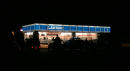
The Lawson Station "kombiini" (convenience store) in the town of Ashiro, where the road leading to Appi, one of Japans leading winter resorts, intersects with Route 282.
At first the reader may be skeptical, a convenience store is a place to purchase rice balls, sushi under plastic wrapping, microwave-able hamburgers, cigarettes and alcohol, pay ones bills, and peruse the latest magazines and "manga" (comic books that cater to niche audiences, often with adult themes). A convenience store is most definitely not a place to increase ones knowledge of culture, one may insist. It is merely a tacky plastic reminder of, and a representative of modern mans dependence on the automobile combined with lack of time to suitably prepare for ones basic needs.
In response, I truly believe that the archaeologist of the 30th century will make little distinction and delineation between the nocturnal haunts of deified 19th century poets and the ubiquitous stores that pepper the landscape of 20th and 21st century Japan, that without doubt, have become an indispensable part of the contemporary Japanese way of life. The effect of the convenience store on culture is undeniable and glaringly obvious. There is no better example of that than the daily drive I take from Nishine to Morioka, much of it along Route 282, and the longest road in Japan, Route 4. Along that 26-kilometer drive are no less than thirteen convenience stores; seven Lawson Stations, three Spars (a logo that can be found all over Europe, in addition to Japan), and two Daily Yamazakis and Sunkus, a ratio of one convenience store per 1.2 miles traveled. The effect of the convenience store on modern Japanese culture is so large that Time Magazine-Asia recently devoted an entire article to this staple of Japanese daily life in its issue that focused on "post-bubble economy" Japan.
In fact, Japanese "kombiini" culture is so advanced, that when 7-Eleven, the quintessential American convenience store chain, saw its profits decrease sharply stateside, it quickly turned to the hi-tech management practices of its Japanese subsidiary. The American company (contrary to the insistence of many locals who insist that 7-Eleven is Japanese, it is indeed a multi-national based in the United States) quickly found its operations and profit margins in the United States resurrected after implementing the Japanese "Way of the Kombiini".
As befitting a widespread cultural phenomenon like the kombiini, it is quite frequently the topic of discussion in both the native and foreign communities of Iwate. Accompanying this frequency will be exaggeration, selective interpretation, mistakes in what is said and /or heard, and a general amorphousness in regards to the factual. A perfect example of that would be the previous claim about 7-Eleven being Japanese, which I have heard several times from different sources, only to be refuted upon further research. 7-Eleven-Japan is run as a separate identity, but is still part of the larger 7-Eleven entity.
Among other things I have heard repeatedly is that the number of convenience stores is the largest of any prefecture in Japan. Given that Iwate is the largest prefecture in the country, it may be possible. Anyone who drives throughout the prefecture may well agree, the kombiini can take its place alongside the pachinko parlor, family restaurant, ramen shop, car dealer, and ever-present "jidoohanbaiki" (vending machines selling everything from beer and cigarettes to CDs and pornographic videos), as the economic backbone of Japans well-traveled roadsides. Nonetheless, Iwate is sparsely populated by Japanese standards, and as much as it may seem that way, I strongly doubt the raw numbers of convenience stores is greater here than in Tokyo, one of the worlds largest metropolises. The highest number of convenience stores per capita, however, would get no argument from me.
The Appi Kogen Lawson Station is probably at the center of the maelstrom of attention given to convenience stores. I have heard many times that it is the busiest convenience store in Japan, or variations of that theme, in both Japanese and English, from both locals and ex-pats. A single solitary store, in a rural town, with a population of just about 10,000 the busiest in Japan? I really doubt that, my guess is that a single store in Tokyos crowded shopping districts such as the Ginza, Shinjukju, and Harajuku see that many people walk by in the space of an hours worth of time. A more probable explanation, one that I have also heard more than once is that during O-Shoogatsu, the busy New Years holiday, at one of Japans most popular ski resorts, it does pull in more business than any other Lawson Station, which is more of a regional than national chain.
Lawson Station at NightSo the next time you are driving along Route 284 in Ashiro, and the sign welcoming you to Appi Kogen beckons, stop by the convenience store next to the sign. You will be witnessing an important participant in modern-day Iwate culture. An attraction, that may someday take its place alongside the temples, shrines, museums, memorials, and other landmarks that define Iwate, not just as a bastion of traditional culture, but as something truly representative of its time, in this case on the cutting edge of it.
© Dean H. Ruetzler March 2004
rudean77@yahoo.com
Nishine, Iwate Prefecture, Japan and East Warren/South Burlington, Vermont, USA
Japan: A Reinterpretation
by Patrick Smith- reviewed by Dean H Ruetzler
The best Steakhouse in Japan
Dean H Ruetzler
Curry Farming in Vermont
Dean H Ruezler
Home© Hackwriters 2000-2004
all rights reserved